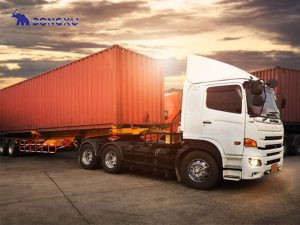
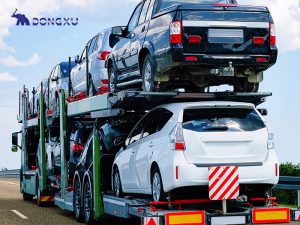
A semi-trailer is a type of trailer designed to be towed by a truck. Unlike a full trailer, a semi-trailer doesn’t have a front axle; instead, it relies on a specialized hitching mechanism that connects to a tractor unit (the truck) at the rear. This design allows the semi-trailer to distribute its weight more evenly and provides greater maneuverability. Here’s a breakdown of its key components and features:
Key Components
- Trailer Bed: The main cargo area where goods are loaded and transported.
- Kingpin: A metal pin at the front of the semi-trailer that connects to the fifth wheel on the tractor. It’s the primary coupling point that secures the trailer to the truck.
- Axles and Wheels: Typically located at the rear of the trailer, they support the trailer’s weight and allow it to roll. The number of axles can vary.
- Landing Gear: Retractable legs at the front of the semi-trailer that support the trailer when it’s not hitched to the tractor. They can be cranked up or down to adjust the height of the trailer.
Types of Semi-Trailers
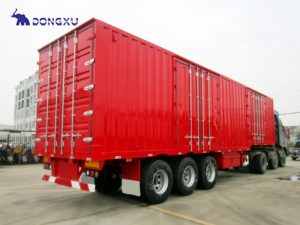
- Dry Van: Enclosed trailer for general cargo protection from weather and theft.
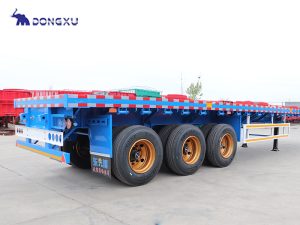
- Flatbed: Open platform without sides or a roof, ideal for oversized or heavy cargo that doesn’t need protection.
- Refrigerated (Reefer): Equipped with a cooling system to transport temperature-sensitive goods.
- Tanker: Designed to carry liquids, including hazardous materials. It usually has a cylindrical shape.
- Drop Deck: Features a lower deck to accommodate taller cargo, such as heavy equipment.
- Curtain Side: Similar to a flatbed but with side curtains that can be pulled back for easy loading and unloading.
Features
- Flexible Loading: Semi-trailers can be loaded from the rear, sides, or top, depending on the design.
- Increased Maneuverability: The lack of a front axle allows for tighter turns and better handling compared to full trailers.
- Interchangeability: The same tractor unit can tow different types of semi-trailers, depending on the cargo needs.
Uses
Semi-trailers are commonly used in the freight and logistics industries to transport goods over long distances. They are favored for their efficiency and versatility in hauling a wide range of cargo types.
 Dong Xu Trailer, Semi Trailer
HelloPlease log in